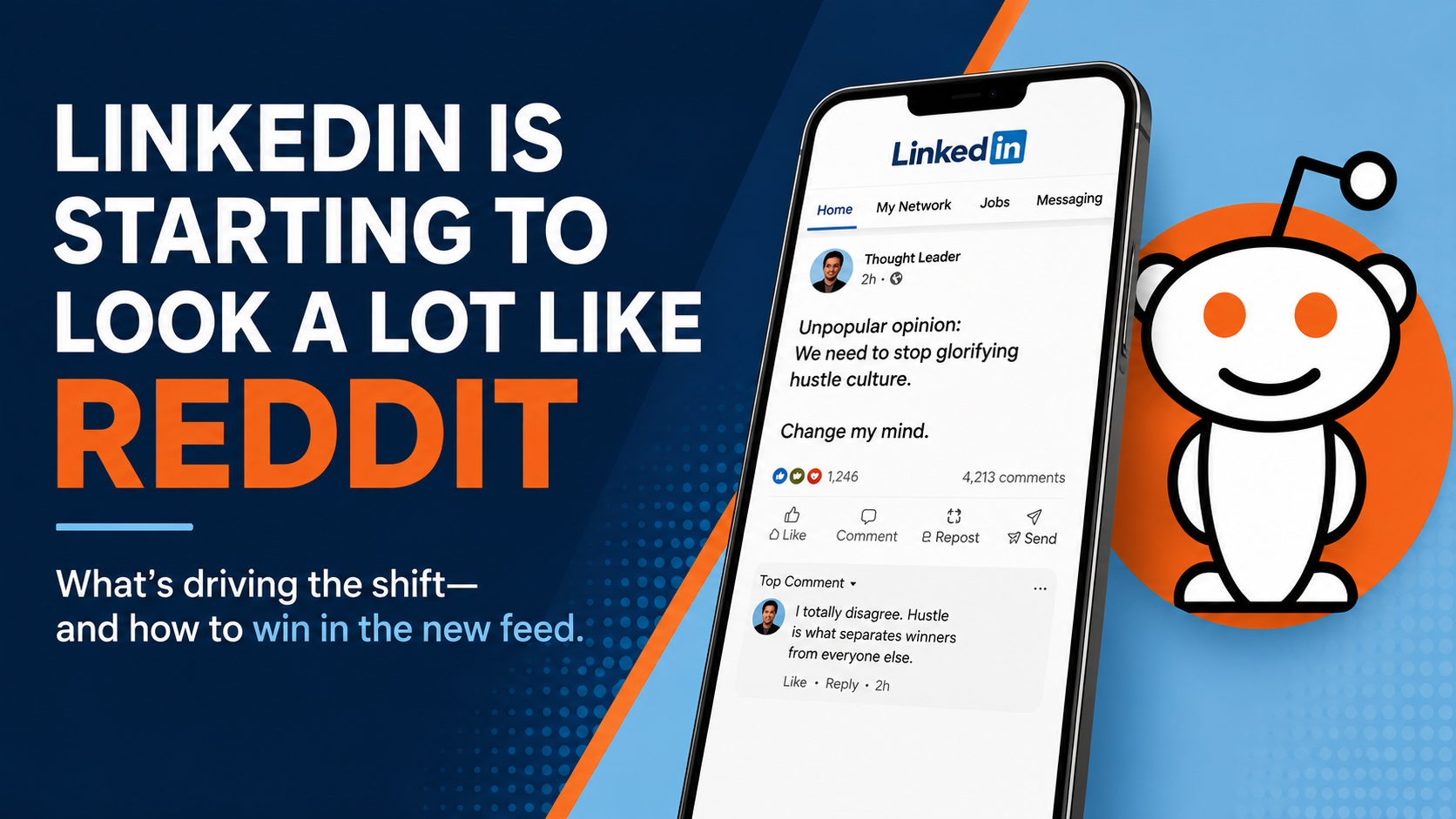

Remember when your LinkedIn feed used to be boring! Now it reads like a subreddit, and that's no accident.
Scroll for five minutes, and you'll see it: hot takes with 4,000comments, "unpopular opinion" posts engineered to divide, screenshots of texts, breakup stories dressed up as leadership lessons, and threads where strangers argue in the replies for hours. This isn't theresume-and-recommendations platform from 2015. It's starting to feel like Reddit with better dress codes.
Why This Is Happening
The algorithm rewards conversation over credentials. LinkedIn's feed now prioritizes posts that spark comments and debate, the same signal Reddit has optimized for since day one. A polarizing opinion reaches more people than a polished case study, so creators have learned to write for the algorithm rather than the industry.
Anonymity-adjacent behavior is on the rise. People aren't anonymous on LinkedIn, yet too many now post as if they are: oversharing personal drama, picking fights with strangers, and treating comment sections as debate arenas rather than professional spaces.
Micro-communities are forming. Like subreddits, niche groups have formed around specific identities (recruiters, founders, laid-off tech workers) who mostly talk to each other, developing inside jokes and shared grievances that outsiders don't understand.
Engagement bait has become a format. I’m seeing way too many fake posts, fake vulnerability, and manufactured controversy. These aren't new to social media, but they're new to LinkedIn at this scale.
What This Means for You
This shift isn't just a curiosity. It changes how you should show up on the platform. Here’s what I’ve noticed lately.
1. Expect debate, not just applause. Posting with a point of view now invites pushback, not just likes. Prepare your replies before you publish, not after the comments arrive.
2. Vulnerability performs, but sincerity still wins long term. Personal stories drive engagement, but audiences are getting sharper at spotting manufactured emotion. Share real lessons, not manufactured trauma.
3. Community beats broadcast. The creators winning right now aren't shouting into the feed. They'rereplying, DMing, and consistently showing up in other people's comment sections, the same way active Reddit users build karma and reputation.
4. Your comment section is now part of your content. People judge you by how you handle disagreement in the replies, not just by the post. Treat comments as an extension of your brand, not an afterthought.
Three Actions to Take This Week
· Audit your last 10 posts. Which ones sparked genuine discussion, and which ones just got passive likes? Double down on the format that generated real conversation.
· Reply to every comment for one week. Track changes in engagement and reach. Most people abandon their own comment sections; showing up is a low-cost differentiator.
· Pick one niche community on LinkedIn and contribute to it daily. Comment thoughtfully on five posts in your space each day before you post anything of your own. Reputation is built in replies before it's built in posts.
The Bigger Picture
LinkedIn isn't becoming Reddit by accident. It's chasing the same engagement mechanics that made Reddit sticky: debate, identity, and community. Whether that's good for professional networking is a separate question, but sinceit's the platform we're all posting on now, it's worth understanding the incentives before you post your next update.
What's your take? Is this shift good for what has always been known as“the world’s largest professional networking platform,” or is it diluting what made LinkedIn useful in the first place? Drop your take in the comments; I'dgenuinely like to know your thoughts!